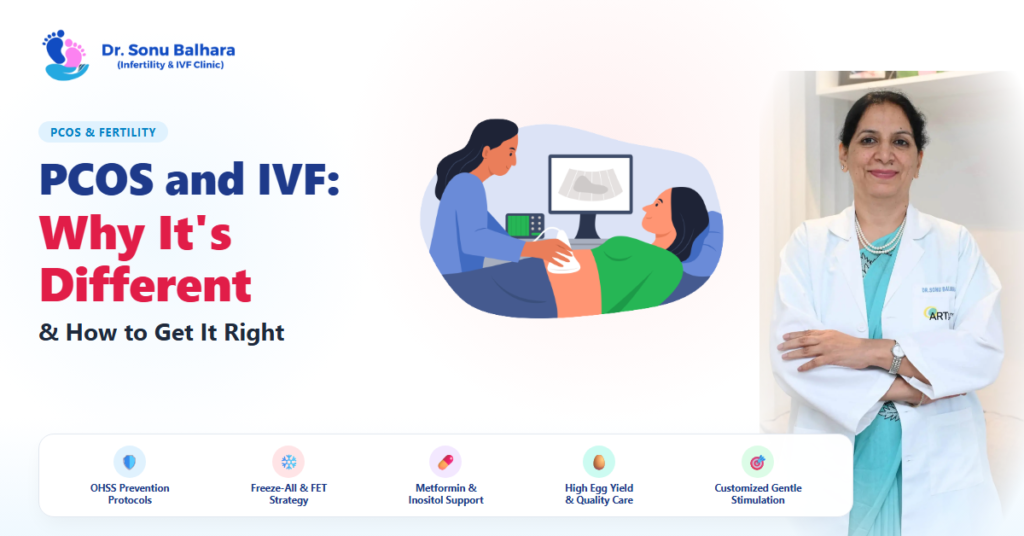
Polycystic Ovary Syndrome (PCOS) is the most common hormonal disorder affecting women of reproductive age, present in approximately 8–13% of women globally (WHO, 2023). It is also one of the most common causes of infertility — yet paradoxically, women with PCOS often have an abundance of eggs. The challenge is not quantity but quality, and the risk of dangerous over-response to fertility drugs.
Dr. Sonu Balhara has treated hundreds of women with PCOS at her Gurugram practice. This blog explains what makes PCOS-IVF different, and how modern protocols have transformed outcomes.
Why Standard IVF Protocols Don’t Always Work for PCOS
The same quality of eggs that makes PCOS ovaries respond vigorously to stimulation also creates the principal risk: Ovarian Hyperstimulation Syndrome (OHSS). In OHSS, too many follicles develop, causing the ovaries to swell and fluid to shift into the abdomen — a potentially dangerous complication.
ESHRE (2023 PCOS Guidelines) classifies OHSS as:
Mild: Bloating, mild discomfort — managed at home
Moderate: Abdominal pain, nausea, vomiting — may require monitoring
Severe: Fluid in lungs or abdomen, reduced urine output, blood clots — hospitalisation required
The old “conventional” long protocol (using GnRH agonist down-regulation) carries a significantly higher OHSS risk in PCOS patients than modern antagonist protocols.
ESHRE-Recommended Approach for PCOS and IVF (2023)
ESHRE’s 2023 international evidence-based guidelines for PCOS (the most comprehensive update since 2018) make the following key recommendations for IVF in PCOS:
- 1. GnRH Antagonist Protocol (Preferred)
The antagonist protocol allows the use of a GnRH agonist trigger instead of hCG — this dramatically reduces OHSS risk while maintaining egg maturity and fertilisation rates.
- 2. Freeze-All Strategy
Instead of fresh embryo transfer (which is riskier in OHSS-prone cycles), all viable embryos are vitrified (flash-frozen), and transfer is done in a subsequent natural or medicated frozen cycle. ESHRE notes this reduces OHSS complications and may improve implantation.
- 3. Metformin
ESHRE (2023) gives Metformin a strong recommendation for use during ovarian stimulation in PCOS to reduce OHSS risk. Metformin lowers insulin and LH levels, which helps regularise follicular development.
- 4. Low Stimulation Doses
Starting with lower FSH doses (100–150 IU/day) and careful dose adjustment reduces the risk of recruiting too many follicles at once.
- 5. Triggering with GnRH Agonist
Using Lupron (leuprolide) as the trigger instead of hCG almost eliminates the risk of late-onset severe OHSS, which is the most serious form.
IVF Success Rates in PCOS: Reasons for Optimism
Women with PCOS often have excellent embryo yields because they produce more eggs. The key is converting this into live births:
Women with PCOS have comparable IVF live birth rates to non-PCOS women when optimally managed (ESHRE 2023, Cochrane systematic review 2021)
The freeze-all strategy in PCOS may improve cumulative live birth rates by allowing the uterus to be in a more receptive state during transfer
Insulin-sensitising agents (Metformin, Myoinositol) may improve egg quality and embryo quality in PCOS — with Myoinositol showing benefit in several RCTs (Unfer et al., Frontiers in Endocrinology 2022)
Lifestyle Changes That Make a Real Difference in PCOS-IVF
ESHRE’s 2023 guidelines place lifestyle intervention as a first-line recommendation, even before medication. For women with PCOS and BMI >25:
A 5–10% reduction in body weight can restore ovulation in a significant proportion of anovulatory PCOS women (without any medication)
Low glycaemic index (GI) diet reduces insulin resistance and improves menstrual regularity
Moderate exercise (150 minutes/week): improves insulin sensitivity and reduces androgens
Stress management: elevated cortisol worsens insulin resistance — yoga and mindfulness have small but significant evidence
Special Situations in PCOS-IVF
Thin PCOS
Not all women with PCOS are overweight. Lean PCOS (BMI <23) still has hormonal dysregulation but insulin resistance may be less pronounced. Stimulation protocols need careful calibration — these women can still develop OHSS.
PCOS with Poor Egg Quality
Even with many eggs, some PCOS women have poor fertilisation rates. This may reflect egg maturity issues (many may be immature MI oocytes). Dr. Sonu Balhara evaluates extended maturation protocols and considers IVM (In Vitro Maturation) in selected cases.
PCOS and Thin Endometrium
Elevated androgens in PCOS can sometimes affect uterine lining development. Adequate oestrogen support during the FET cycle is essential.
Dr. Sonu Balhara‘s Approach at Nova IVF Fertility, Gurugram
“PCOS is one of the most manageable causes of infertility when handled correctly. I combine the latest ESHRE evidence-based protocols — antagonist stimulation, GnRH agonist trigger, freeze-all, Metformin support — with personalised monitoring. The goal is not just to retrieve eggs, but to protect your health and maximise your chances of a healthy baby.” — Dr. Sonu Balhara
References
- ESHRE International Evidence-Based Guideline for PCOS (2023). Human Reproduction Open
- WHO (2023). Polycystic ovary syndrome fact sheet
- Cochrane Review (2021). Interventions for anovulatory infertility with PCOS. Balen et al.
- Unfer V et al. (2022). Myoinositol in IVF. Frontiers in Endocrinology
Schedule a Consultation with Dr. Sonu Balhara
Whether you are exploring IVF options, considering embryo transfer protocols, or seeking a second opinion on fertility treatment in Gurgaon, Dr. Sonu Balhara provides personalized, compassionate, and transparent care backed by 25+ years of clinical excellence.
📍 Clinic: Nova IVF Fertility, Plot No. 522, near DLF Mega Mall, Sector-27, Gurugram
📞 Phone / WhatsApp: +91 9811409586 |
🌐 Website: sonubalharaivf.com