In Vitro Fertilisation (IVF)
In Vitro Fertilisation (IVF) is one of the most effective and widely used assisted reproductive technologies (ART) available today, helping individuals and couples overcome infertility and build their families.
Overview
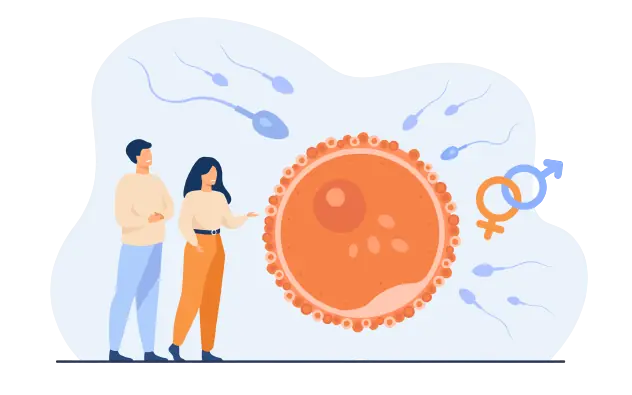
During IVF, eggs are retrieved from the ovaries and fertilised with sperm in a specialised laboratory environment, outside the body. The resulting embryo is then carefully monitored before being transferred into the uterus, where it can implant and develop into a pregnancy.
At Dr. Sonu Balhara's fertility centre in Gurgaon, every IVF journey is personalised — from the first consultation and diagnostic work-up through to embryo transfer and pregnancy confirmation. Whether you are exploring IVF for the first time or have had previous treatment elsewhere, this page walks you through what IVF treatment is, how IVF works, and the IVF process step by step, so you know exactly what to expect.
What Is IVF Treatment?
IVF treatment (In Vitro Fertilisation) is a fertility treatment in which an egg and sperm are combined in a laboratory dish ("in vitro" literally means "in glass") rather than inside the body. Once fertilisation occurs and the resulting embryo has developed for a few days under controlled laboratory conditions, it is transferred into the woman's uterus with the aim of achieving a successful pregnancy.
IVF is often recommended when natural conception or simpler fertility treatments — such as timed intercourse or intrauterine insemination (IUI) — have not been successful, or when a specific medical diagnosis makes IVF the most appropriate first option. The basic steps of an IVF cycle — ovarian stimulation, egg retrieval, fertilisation, embryo culture, and embryo transfer — are consistent across fertility clinics worldwide.
Who May Need IVF Treatment?
IVF may be recommended for individuals and couples facing a wide range of fertility challenges, including:
- Blocked, damaged, or absent fallopian tubes
- Male factor infertility, including low sperm count, poor motility, or abnormal sperm morphology
- Ovulation disorders, including PCOS (polycystic ovary syndrome)
- Endometriosis affecting fertility
- Diminished ovarian reserve or age-related decline in egg quality
- Unexplained infertility after other investigations have been completed
- Failed IUI cycles or previous unsuccessful fertility treatment
- Genetic conditions where embryos may need to be screened before transfer (PGT)
- Single parents by choice or same-sex couples using donor sperm, donor eggs, or a gestational surrogate
- Fertility preservation needs, such as before cancer treatment
This list reflects the standard indications for IVF described by ASRM's patient education materials.
A detailed consultation and fertility work-up with Dr. Sonu Balhara will help determine whether IVF is the right path for your specific situation, or whether a less invasive treatment should be tried first.
How IVF Works
Understanding how IVF works can make the process feel far less overwhelming. In simple terms, IVF works by taking control of and closely monitoring each stage of conception that would normally happen inside the body:
- The ovaries are stimulated with fertility medication to encourage the growth of multiple mature eggs, rather than the single egg released in a natural cycle.
- These eggs are collected in a minor, monitored procedure once they reach the right stage of maturity.
- In the laboratory, the eggs are fertilised with sperm — either by mixing them together or, where needed, by injecting a single sperm directly into each egg (a technique called ICSI).
- Fertilised eggs (embryos) are cultured and observed in the lab for several days as they grow and develop.
- One healthy embryo (occasionally more, depending on clinical advice) is then transferred into the uterus, where it may implant into the uterine lining and result in pregnancy.
This five-stage structure — stimulation, retrieval, fertilisation, culture, transfer — matches the official description of the IVF cycle.
IVF Process Step by Step
Here is the IVF process step by step, from your first visit to the pregnancy test:
Step 1: Initial Consultation & Fertility Assessment: Dr. Sonu Balhara reviews your medical history and orders baseline investigations for both partners, such as hormone blood tests, an ultrasound to assess ovarian reserve, and a semen analysis. This determines the most suitable IVF protocol for you.
Step 2: Ovarian Stimulation: Daily hormone injections are given for approximately 8 to 14 days to stimulate the ovaries to produce multiple mature eggs, instead of the one egg released in a natural cycle.
Step 3: Monitoring: Regular blood tests and transvaginal ultrasounds track follicle growth and hormone levels, allowing the treatment team to fine-tune medication doses and decide the right time for the next step.
Step 4: Trigger Injection: Once the follicles reach the ideal size, a single "trigger shot" is given roughly 36 hours before egg retrieval to complete the final maturation of the eggs.
Step 5: Egg Retrieval: A short, minimally invasive procedure performed under sedation, in which a fine needle is guided (via ultrasound) through the vaginal wall to collect the mature eggs from the ovaries. This step usually takes about 20 minutes, and most patients go home the same day.
Step 6: Sperm Collection: A fresh or previously frozen sperm sample is collected and prepared in the lab on the same day as egg retrieval.
Step 7: Fertilisation: The eggs and sperm are combined in the laboratory — either through conventional insemination or ICSI (Intracytoplasmic Sperm Injection), where a single sperm is injected directly into each mature egg.
Step 8: Embryo Culture & Development: Fertilised eggs are cultured in the embryology lab for 2 to 5 days, with embryologists monitoring their growth and grading their quality. Embryos reaching day 5 are known as blastocysts.
Step 9: Embryo Transfer: The best-quality embryo (or, if clinically advised, more than one) is transferred into the uterus through a thin catheter. This is a quick procedure — usually 15 to 20 minutes — that does not require sedation or anaesthesia and should not be painful. Any remaining suitable embryos can be frozen for future use.
Step 10: Luteal Support: Progesterone and/or other hormonal support is prescribed after transfer to help prepare and maintain the uterine lining for implantation.
Step 11: Pregnancy Test: A blood test (beta-hCG) confirms whether the cycle has resulted in a pregnancy, typically taken around 10 to 14 days after embryo transfer, followed by a confirmatory ultrasound a couple of weeks later.
How Many IVF Injections Are Required?
Most patients require daily stimulation injections for around 8 to 14 days during the ovarian stimulation phase, plus a single trigger injection roughly 36 hours before egg retrieval.
The exact number of injections and total dose depend on your individual protocol, ovarian response, and how your body responds to medication during monitoring — which is why doses are adjusted throughout the cycle rather than fixed in advance. Some patients may also be prescribed additional hormonal support after embryo transfer to help maintain the uterine lining. Dr. Sonu Balhara will explain your specific injection schedule during your treatment planning consultation.
How Many Hospital Visits Are Needed During IVF?
A typical IVF cycle involves multiple visits to the clinic, most of which are brief monitoring appointments:
- 1–2 visits for initial consultation and baseline investigations
- Approximately 5–7 monitoring visits during ovarian stimulation for blood tests and ultrasound scans
- 1 visit for the egg retrieval procedure
- 1 visit for embryo transfer (usually a few days after retrieval, or in a later frozen cycle)
- 1 visit for the pregnancy test and follow-up scan
Adding these stages together, most patients can expect somewhere in the region of 8–10 clinic visits across a single IVF cycle, though the exact number varies by protocol and by how your body responds to treatment. This total is a reasonable sum of the individually-sourced stages above rather than a single published figure — please flag to the SEO team if a more precise number is needed and we can request it from the clinic directly.
How Long Does the IVF Process Take?
A single IVF cycle typically takes around 3 to 6 weeks to complete.
This is consistent with guidance from the American Society for Reproductive Medicine, which describes each ART cycle as occurring within a four-to-six week period.
If embryos are frozen for a later transfer (rather than a fresh transfer in the same cycle), the timeline will extend to accommodate a separate frozen embryo transfer (FET) cycle. Dr. Sonu Balhara will give you a personalised timeline based on your treatment plan at your consultation.
IVF Cost in Gurgaon
The cost of IVF treatment in Gurgaon varies depending on several factors, including the specific protocol recommended, the medications required, whether techniques such as ICSI or embryo freezing are needed, and the number of cycles undertaken. At Dr. Sonu Balhara's clinic, every patient receives a transparent, itemised cost estimate during their consultation, based on their individual treatment plan.
IVF Success Rate
IVF success rates depend on multiple factors, including the woman's age, ovarian reserve, the underlying cause of infertility, embryo quality, and overall health of both partners. Age is consistently identified as the single most significant factor.
As an illustration of the scale of this age effect: the UK's Human Fertilisation and Embryology Authority (HFEA) — the official regulator of UK fertility clinics — reported that in 2022, the average IVF birth rate per embryo transferred was 35% for patients aged 18–34, falling to 10% for patients aged 40–42, and 5% for patients aged 43–44.
Frequently Asked Questions About IVF
What is IVF treatment in simple terms?
IVF treatment is a fertility procedure where an egg and sperm are fertilised in a laboratory rather than inside the body, and the resulting embryo is then transferred into the uterus to establish a pregnancy.
How does IVF work step by step?
IVF works through ovarian stimulation, egg retrieval, fertilisation in the lab, embryo culture, and embryo transfer, followed by a pregnancy test — each stage closely monitored by the fertility team.
Is IVF painful?
Most of the IVF process involves injections and monitoring scans, which cause mild discomfort at most. Egg retrieval is done under sedation, and embryo transfer is usually painless and does not require anaesthesia.
How many attempts of IVF are usually needed?
Some patients conceive in their first IVF cycle, while others need more than one attempt. Success depends on factors like age, egg and sperm quality, and the underlying cause of infertility, and is discussed individually with each patient.
What is the difference between IVF and ICSI?
IVF involves mixing eggs and sperm together in a dish to allow natural fertilisation, while ICSI involves injecting a single sperm directly into each egg. ICSI is typically recommended for male factor infertility.
Can IVF be done without injections?
Some form of hormonal medication is required in almost all IVF cycles to stimulate egg development, though the number and type of injections can vary based on the protocol used, including "mild" or "minimal stimulation" IVF approaches.
How soon can I know if IVF has worked?
A blood pregnancy test (beta-hCG) is typically done around 10 to 14 days after embryo transfer, followed by a confirmatory ultrasound roughly two weeks later.
Feel Free to Contact us
Our Fertility Services
Related Blogs
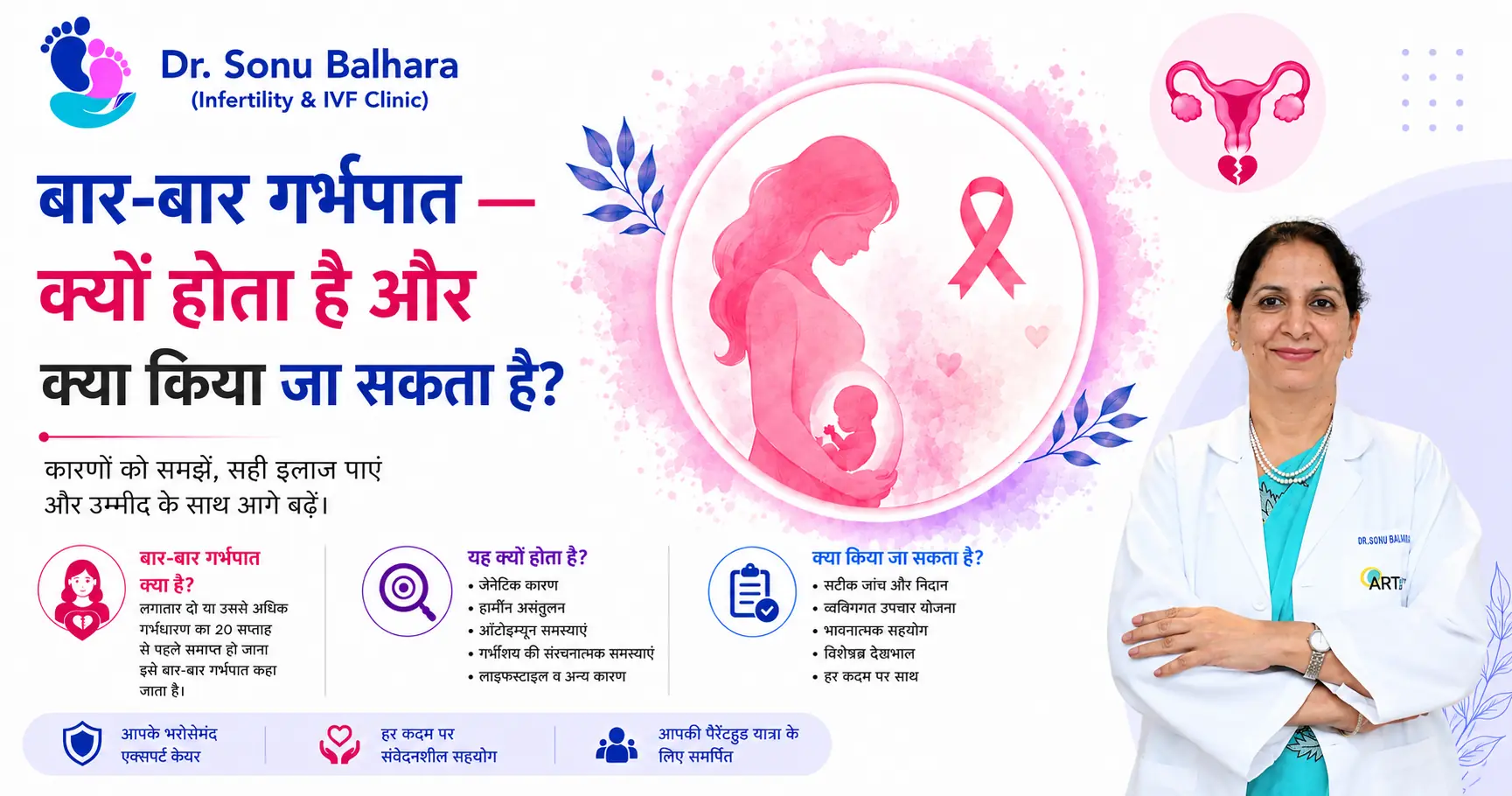
बार-बार गर्भपात — क्यों होता है और क्या किया जा सकता है?
Recurrent Miscarriage: Why It Happens and What Can Be Done