When you are going through IVF, you want to do everything possible to give it the best chance. And while diet is not the deciding factor in IVF success — the embryo and uterus quality matter most — what you eat can support egg quality, hormone balance, and your body’s response to the treatment.
Dr. Sonu Balhara, IVF & Fertility Expert at ART Fertility Clinics, Gurugram, gives patients simple, practical nutrition guidance before and during IVF. This blog covers what she recommends — in simple, everyday language.
Why Does Nutrition Matter During IVF?
During IVF stimulation, your body is working hard to grow multiple eggs at once. The follicles developing in your ovaries need the right building blocks — proteins, healthy fats, vitamins, and minerals — to produce good quality eggs.
Similarly, after embryo transfer, the uterine lining needs to be well-nourished and receptive. Inflammation in the body — often caused by poor diet — can interfere with implantation.
Good nutrition will not fix a poor quality embryo. But poor nutrition can reduce the quality of what is already there. So it is worth getting right.
Foods That Support IVF — What to Eat More Of
Protein — the foundation of egg quality
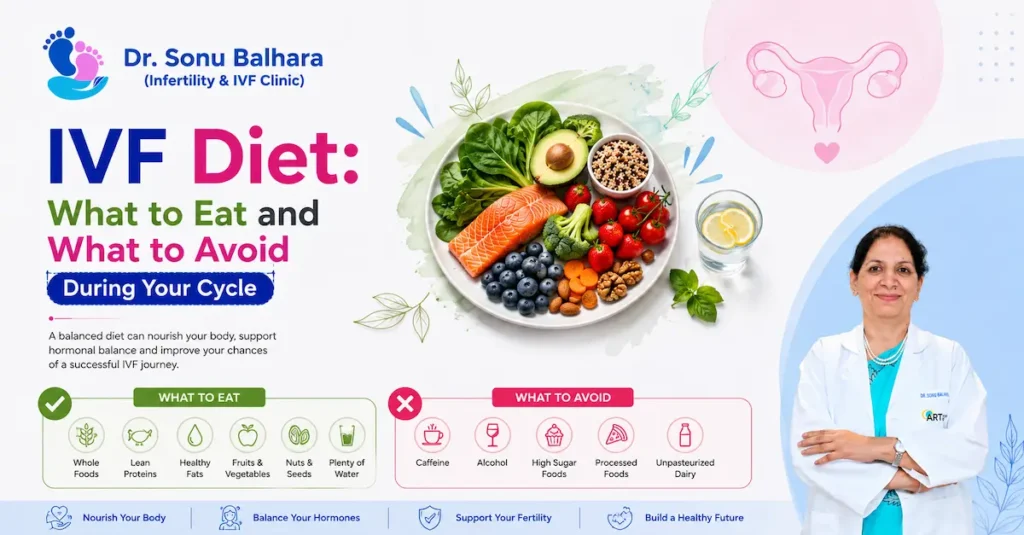
Eggs — the ones you eat — are an excellent source. Paneer, dal, lentils, chickpeas, fish, chicken, and nuts are all good. Aim to include a protein source in every meal during stimulation. Protein supports follicle development and hormone production.
Healthy fats — Omega-3 and good oils
Omega-3 fatty acids improve egg quality and reduce inflammation. Best sources: walnuts, flaxseeds (alsi), fatty fish like salmon and sardines, and chia seeds. Use cold-pressed mustard oil or olive oil in cooking. Avoid refined vegetable oils.
Antioxidants — protecting egg quality
Antioxidants protect eggs from cellular damage. Best sources: all colourful vegetables and fruits — tomatoes, spinach, carrots, broccoli, amla, berries, pomegranate. The more colour on your plate, the better.
Folate and B vitamins — essential for embryo development
Folic acid is critical — start at least 3 months before IVF if possible. Food sources: leafy greens like palak and methi, dal, lentils, eggs. Your doctor will also prescribe a folic acid supplement.
Iron — for a healthy uterine lining
Iron supports blood supply to the uterus. Good sources: spinach, lentils, pomegranate, sesame seeds (til), jaggery (gur). Eat iron-rich foods with Vitamin C to improve absorption.
Vitamin D — often deficient in Indian women
Vitamin D plays a role in egg quality and implantation. Get a blood test to check your levels. Food sources are limited — sunlight and supplements are the main way to address deficiency.
Indian Foods That Are Especially Helpful
- Ghee: Yes — in moderation. Good fat source that supports hormone production
- Dal and rajma: Excellent protein and folate
- Amla (Indian gooseberry): One of the richest sources of Vitamin C and antioxidants
- Til (sesame seeds): Rich in calcium, iron, and healthy fats
- Haldi (turmeric): Anti-inflammatory — good in milk or food, but avoid high supplements
- Coconut water: Hydration and natural electrolytes, especially post-retrieval
- Pomegranate juice: Supports blood flow to the uterine lining
What to Avoid During IVF
Alcohol
Even small amounts of alcohol affect egg quality and hormone levels. Avoid completely from the start of your IVF cycle until you know the outcome of the pregnancy test.
Excess caffeine
More than one cup of tea or coffee per day is not recommended during IVF. Switch to herbal teas, warm water with lemon, or coconut water.
Processed and packaged food
Biscuits, chips, instant noodles, white bread, maida-based foods — these cause inflammation and blood sugar spikes that are not helpful during IVF. Eat fresh, home-cooked food as much as possible.
Raw papaya and pineapple in excess
Raw papaya contains papain which can affect the uterus. Pineapple has bromelain — a small amount after transfer is sometimes recommended, but do not overdo it. Ask your doctor.
Unpasteurised dairy and raw meat
Avoid these to reduce risk of infection, especially around embryo transfer and after.
Very high-fat or very spicy food
These can cause bloating and discomfort — especially during the stimulation phase when ovaries are enlarged. Keep food light and easy to digest.
Nutrition After Embryo Transfer
After transfer, the focus shifts to keeping the uterine lining warm and well-nourished. In many Indian traditions, women are advised to eat warm, easily digestible food after a medical procedure — this is actually good advice.
- Warm, cooked food rather than cold, raw salads
- Lightly spiced dal, khichdi, and soups are ideal
- Continue protein, folate, and iron-rich foods
- Stay well-hydrated — warm water, coconut water, herbal teas
- Avoid cold drinks, ice cream, and refrigerator-cold foods for the first few days
Supplements During IVF
Dr. Sonu Balhara prescribes supplements based on each patient’s blood tests and individual needs. Common ones include:
- Folic acid — essential and officially recommended by ASRM. Start at least 3 months before if possible
- Vitamin D — supplementation if blood test confirms deficiency. Association with IVF outcomes exists but official guidance on routine supplementation is not yet established
- CoQ10 — may support egg quality especially in poor responders and women over 35. Evidence is promising but ASRM and ESHRE note it is not a standard routine recommendation. Use only if advised by your doctor (Source: ASRM 2022; ESHRE 2025)
- Omega-3 — associated with improvements in some IVF outcomes in research; not yet an officially recommended standard supplement. Discuss with your doctor
- Iron — if anaemia is found
Do not take any supplements beyond what your doctor has prescribed. Some supplements can interfere with IVF medications.
Dr. Sonu Balhara | IVF & Fertility Expert | ART Fertility Clinics, Sector 38, Gurugram | Personal Clinic: Sector 46, Greenwood City, Gurugram | +91 9811409586 | sonubalharaivf.com
Conclusion
Eating well during IVF is about supporting your body — not about strict dieting or perfection. Keep meals fresh, colourful, protein-rich, and home-cooked. Avoid alcohol, excess caffeine, and processed food. Let food be one part of giving your IVF cycle the best possible foundation.
If you are starting an IVF cycle and would like personalised guidance from Dr. Sonu Balhara, book a consultation at ART Fertility Clinics, Sector 38, Gurugram