Starting IVF is one of the most significant decisions a couple can make. At ART Fertility Clinics, Gurugram, Dr. Sonu Balhara has guided thousands of couples — from India and countries including Iraq, Iran, Oman, England, Nigeria, South Africa, Mauritius, Japan, Singapore, and Bangladesh — through this process. One of the most common questions she hears is: “What should we be doing in the months before we start?”
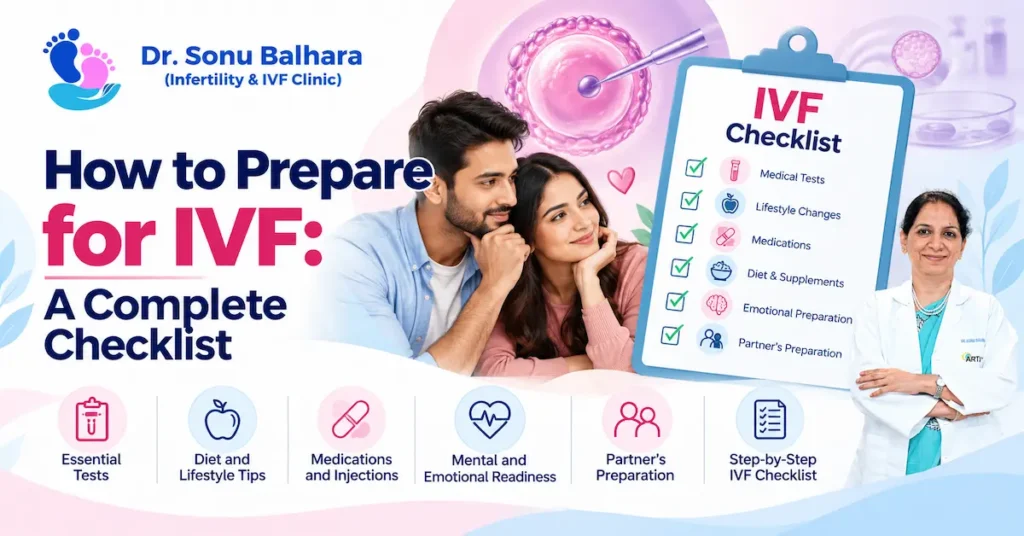
The answer is a structured, practical preparation plan. Here is Dr. Sonu Balhara’s complete IVF preparation checklist.
Why Preparation Matters: The 90-Day Window
Eggs and sperm each take approximately 90 days to develop and mature. This means that the lifestyle choices you make today will affect the quality of your eggs and sperm at the time of your IVF cycle — not next week, but in about three months. This is both a challenge and an opportunity: there is real scope to improve egg and sperm quality in the months before treatment begins.
Medical Checklist — Before Your Cycle Begins
For Both Partners
- Complete fertility investigations: hormone tests, semen analysis, pelvic ultrasound, uterine assessment
- Up-to-date blood group and screening: rubella immunity, HIV, Hepatitis B and C, syphilis, thalassaemia screening
- Review all current medications with your doctor — some medications (including testosterone, anabolic steroids, certain antidepressants, and antihypertensives) can significantly affect fertility
- Dental health check — active dental infection is ideally addressed before hormonal stimulation
For Women
- Ovarian reserve assessment: AMH (anti-Müllerian hormone) and antral follicle count (AFC) on Day 2–3 scan
- Uterine assessment: hysteroscopy if indicated (any concern about fibroids, polyps, uterine septum, or previous uterine surgery)
- Thyroid function test — hypothyroidism affects implantation; TSH should ideally be below 2.5 mIU/L before IVF
- Prolactin level — elevated prolactin suppresses ovulation and implantation
- Blood pressure and blood sugar check — especially relevant in patients over 35 or with PCOS
For Men
- Semen analysis (2–3 days of abstinence before providing the sample)
- Hormone panel: FSH, LH, testosterone, prolactin — if semen analysis is abnormal
- DNA fragmentation test — if semen analysis is borderline, or there is a history of recurrent miscarriage or failed IVF
- Disclosure of any testosterone or hormone supplement use
Nutrition Checklist
Start Folic Acid Now
Folic acid (folate) is the only supplement universally recommended for women trying to conceive. The ASRM recommends 400 mcg daily for most women, and 5 mg daily for those with a prior neural tube defect history, diabetes, or BMI >30. Ideally start at least 3 months before conception, as folate builds up in the body gradually.
Eat for Egg and Sperm Quality
- Mediterranean-style diet: olive oil, oily fish (salmon, sardines), pulses, vegetables, nuts, whole grains
- Reduce processed food, trans fats, and excess sugar
- Men: increase zinc (pumpkin seeds, seafood), selenium (Brazil nuts), and antioxidants (vitamin C and E)
- Avoid excessive caffeine — limit to 1–2 cups of coffee per day
Weight and BMI
BMI significantly affects IVF outcomes. Both underweight (BMI <18.5) and overweight (BMI >30) are associated with lower success rates and higher complication risks. Even a 5% reduction in BMI in overweight women has been shown to improve response to stimulation. Aim for a healthy BMI before starting.
Lifestyle Checklist
Stop Smoking — Both Partners
Smoking damages DNA in eggs and sperm, reduces ovarian reserve, and significantly lowers IVF success rates. There is no safe level of smoking during IVF preparation.
Reduce Alcohol — Both Partners
Heavy alcohol consumption is associated with lower IVF success. While occasional light drinking is unlikely to be harmful, the recommendation during IVF preparation is to avoid alcohol.
Exercise: The Right Amount
Regular moderate exercise (30 minutes, 5 days a week) supports healthy BMI, reduces stress, and improves insulin sensitivity (important in PCOS). However, very high-intensity exercise (marathon training, heavy endurance sports) may reduce egg quality and affect menstrual regularity. Aim for moderate activity.
Manage Stress
IVF is emotionally demanding. Stress does not cause infertility, but high cortisol levels may affect hormonal balance. Tools that help: yoga, meditation, regular walking, counselling. Dr. Sonu Balhara’s team includes counselling support for patients who need it.
Sleep
7–8 hours of sleep per night supports hormonal regulation. Melatonin (a natural antioxidant produced during sleep) has been investigated for its potential role in egg quality. Prioritise regular sleep schedules in the months before IVF.
Supplements: What the Evidence Says
The supplement market for fertility is enormous and largely unregulated. Here is what is evidence-based versus what is unproven:
Evidence-based (discuss with your doctor before starting):
- Folic acid (400 mcg–5 mg) — universally recommended (ASRM)
- Vitamin D — deficiency is common and associated with lower IVF success; check levels and supplement if deficient
- CoQ10 (Ubiquinol) — antioxidant studied for egg and sperm quality, particularly in women over 37
- Omega-3 fatty acids — anti-inflammatory; some evidence for improvement in sperm parameters
No strong evidence (do not add without medical advice):
- DHEA — studied in poor ovarian responders; not for routine use
- Melatonin — some early studies; not standard
- Most “fertility supplement blends” sold online — often lack clinical evidence
Emotional and Practical Preparation
- Understand your protocol — ask your doctor to walk you through your specific IVF protocol, timing, injections, and monitoring appointments
- Plan your work schedule — monitoring appointments are frequent (every 1–3 days during stimulation)
- Financial planning — understand the full cost breakdown, including medications
- Build your support system — identify 1–2 people who know about your treatment; isolation makes IVF harder
- Consider counselling — especially if this is not your first cycle
International Patients: Additional Checklist
For patients travelling to Dr. Sonu Balhara’s clinic from Iraq, Oman, Sudan, South Africa, Kazakhstan, Turkmenistan, Congo, or other countries:
- Arrange all investigations in your home country before travelling — bring original reports
- Plan a stay of at least 12–14 days for a fresh IVF cycle (from start of stimulation to egg collection)
- Frozen embryo transfer can be planned for a separate trip
- WhatsApp consultation with Dr. Sonu Balhara is available for pre-arrival planning: +91 9811409586
Conclusion
IVF preparation is not just about the medical protocol. The three months before your cycle begins are a meaningful window to improve your physical health, emotional readiness, and the quality of eggs and sperm that will be used in your treatment. Dr. Sonu Balhara and her team at ART Fertility Clinics, Gurugram are here to guide every step.
To begin your IVF journey with Dr. Sonu Balhara, contact ART Fertility Clinics, Sector 38, Gurugram, or her personal clinic in Greenwood City, Sector 46.
Dr. Sonu Balhara | IVF & Fertility Expert | | +91 9811409586 | sonubalharaivf.com